ROYAL COLLEGE OF PODIATRY
Why I swapped the Bar for podiatry
Natasha Wood trained as a barrister, worked at the European Court of Human Rights and spent years advocating for people at their most vulnerable. Then she discovered a profession she had barely heard of.


Ede & Ravenscroft is London’s oldest tailor. Its premises occupy two of the capital’s more gilded addresses: Chancery Lane, in the heart of the legal district, and Burlington Gardens, a short walk from Savile Row – that famous preserve of bespoke tailoring and expensive good taste.
The shops wear their heritage conspicuously. Dark wood panelling. Forest green. Gold lettering across the windows. Established 1689.
Its clientele come for tradition. Ede & Ravenscroft has dressed generations of the British Royal Family and, for centuries, supplied the gowns, wigs and formal dress of the legal profession.
And so, when Natasha Wood was called to the Bar, it was to Ede & Ravenscroft that she went.
A stage of a different kind
She had taken an unlikely route there. At school, Natasha had chosen French, English and Biology for her A levels – a combination her teachers told her did not make sense. Biology, in particular, seemed an odd choice without the other sciences. Natasha chose it because she loved it.
There was no obvious destination called podiatry waiting at the end of any of this.
First came theatre and a passion for storytelling and performance. But the realities of the arts world – its instability and long periods of unemployment – became difficult to ignore when thinking about the future.
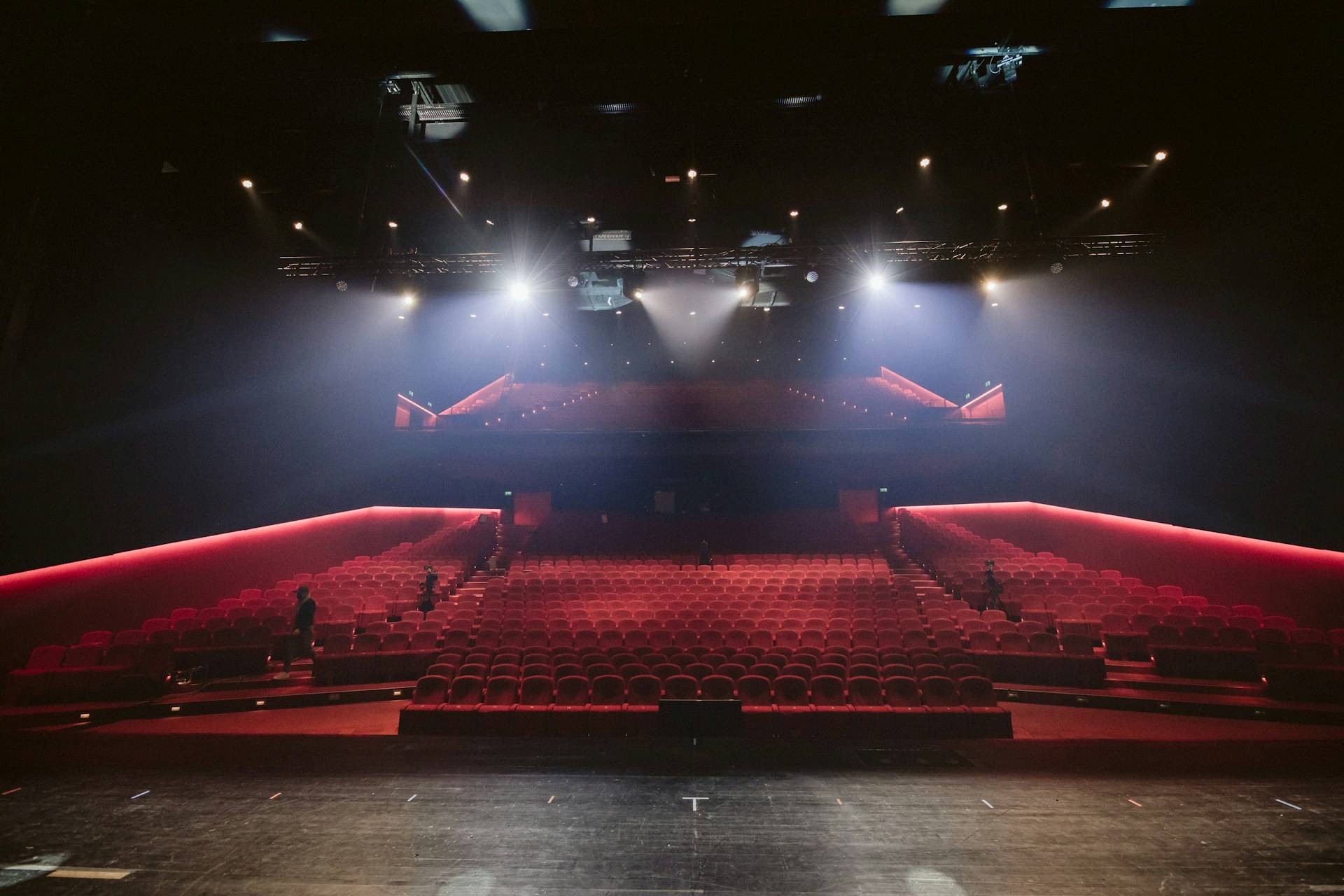
A course correction was needed. Natasha turned towards law, the courtroom offering a stage of a different kind.
She trained as a barrister at Lincoln's Inn before joining chambers in Leeds, specialising in family and criminal law.
While the legal world provided all the intellectual stimulation she could ask for, it came at an emotional cost. The work was taxing and took more from her than it gave, demanding an almost constant performance of perfection against the backdrop of a competitive and often macho environment.
Mistakes were not opportunities to learn – they were liabilities. Vulnerability was hidden and support conditional.
Yet Natasha found meaning in representing people at their most vulnerable. She learned to listen deeply, suspend judgement and advocate with empathy.
Her legal career took her to many places, notably Strasbourg, where she worked at the European Court of Human Rights. It was an inspiring experience, blending her legal expertise with her love of French and her interest in international systems.
But motherhood and the desire to work part-time clashed with the rigidity of the legal world.
Then came the pandemic.
Starting again
Like many people, Natasha found herself reconsidering what she wanted from her working life. She realised she did not want to return to law. She wanted human connection, to end the working day knowing she had made a practical difference to somebody's life, and to work in a more compassionate environment.
Natasha did not know anything about podiatry. Until one day, when she had a chance encounter with somebody studying it.
Its depth and breadth only became apparent when she began her degree at the University of East London, while the country was in the grip of COVID-19 lockdowns.
She found herself immersed in the human body – its complexity and resilience, its brilliance, harmony and contradictions. Anatomy, physiology, pathology, pharmacology, endocrinology, biochemistry, biomechanics, wound care and dermatology. Natasha was astonished by the breadth of what she was learning.
And there, unexpectedly, was biology again.
The A level her teachers had questioned all those years earlier suddenly didn't seem such an odd choice after all.
The curriculum was rigorous and fascinating. The teaching, exceptional. And the clinical placements were transformative.
Hospitals were unfamiliar territory and initially made her nervous. But the culture she encountered on placement felt very different from the world she had left behind. Learning was collaborative. Colleagues were generous with their knowledge. For somebody accustomed to the competitive atmosphere of the Bar, it took some getting used to.
Learning to make mistakes
On graduating in 2023, Natasha joined Lewisham & Greenwich NHS Trust. It was, she says, the perfect place to begin her clinical career.
Early on, she made a clinical mistake.
Her old instincts returned immediately.
She expected repercussions.
Instead, a senior colleague reassured her: ‘You’re learning. That’s how we all learn.’
It was one of the first times Natasha could remember somebody responding to a mistake with compassion rather than criticism.
She found the experience healing.
There was another part of Natasha's life that began to take on a different meaning once she became a podiatrist.
Another way of understanding
Years earlier, during a gap year in Sudan, she had injured her ankle. The consequences left her with chronic pain.
She knew the frustrations of restricted mobility, the emotional impact of using assistive devices and even the seemingly small victory of finding shoes that worked.
None of this was why she became a podiatrist. But once she was one, it gave her another way of understanding the people sitting opposite her.
For Natasha, podiatry has become more than a job. It has given her purpose, a community to be part of and a new lens through which to view the world.
She describes her new profession with affection and says it requires a mixture of skills. It demands technical ability, clinical judgement and emotional intelligence. It allows her to respond to people as they are, whatever their age or background, and help them move through life with less pain and more dignity.
The profession, she believes, is misunderstood and undervalued. Raising its profile has become incredibly important to her.
The lower limb, she says, is extraordinary – complex, resilient and essential to our wellbeing. Podiatry keeps people mobile, independent and engaged with life. It prevents complications, supports recovery and enhances quality of life.
It's not just about feet, she says. It's about people.
Natasha is prouder of her podiatry degree than any other qualification she holds.
For somebody who has studied at Lincoln's Inn, practised at the Bar and worked at the European Court of Human Rights, that's quite a statement.
Perhaps that apparently peculiar choice of Biology A level made more sense than anyone realised.
Podiatry has challenged her and changed her. More importantly, she has found a profession in which the things she valued in her previous lives – communication, advocacy, intellectual curiosity and working with people at vulnerable moments – finally coexist.
And now she has something new to advocate for – podiatry itself.
Just don't expect Ede & Ravenscroft to stock the scrubs.
Featured Posts

Explore Categories





RCPod Annual Conference
26–28 November
ICC Birmingham
Your place
26–28
Nov 2026
ICC Birmingham
Conference & Exhibition + Immersive Day