ROYAL COLLEGE OF PODIATRY
Start with a question
Research doesn't always begin with a plan. Sometimes it starts with an unanswered question, an unexpected opportunity or a conversation with the right person. Seven podiatrists share how they found their way into research – and the people, time and support that made it possible.
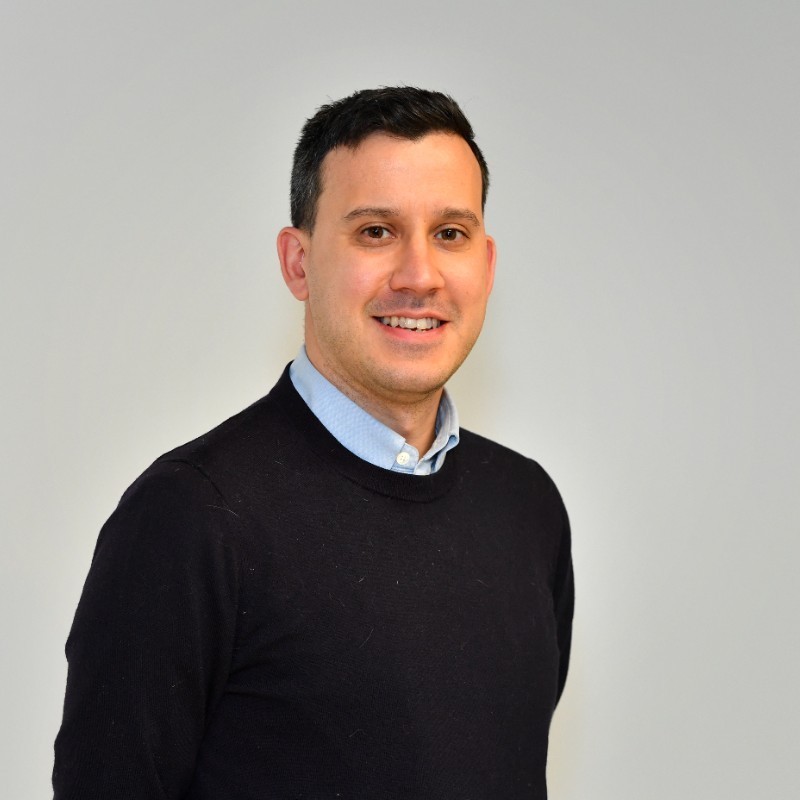

During an undergraduate seminar, a group of podiatry students began comparing their experiences of clinical placements. Some had worked in the NHS, others in independent practice.
Then the conversation took an unexpected turn.
Around a third said they had experienced or witnessed racism. Only a couple had reported what had happened. None of the incidents had been brought to the university's attention.
Why had so few students reported what they had experienced? Monique Cleary wanted to find out.
With funding and academic support from the university, she assembled a team of student researchers to investigate what prevented students from reporting racism during placements. Their findings, she says, prompted changes across the school of health sciences, including revised policies, training and reporting procedures.
Monique had not even graduated when the university began acting on the results.
“Witnessing with my own eyes that research can lead to direct action and change showed me the power of research,” she says.
She is now pursuing a PhD focused on foot health education and a sustainable workforce.
What began as a conversation among students might easily have remained one. Monique had a question she wanted to investigate, but she also had people willing to help, funding and the backing of her university. Questions arising in clinical practice do not automatically come with those things.
Persistent questions
Dr Gabriel Gijon-Nogueron had questions of his own almost as soon as he started practising podiatry in Spain.
“I have always wanted to understand why things happen,” he says.
He wanted to know why treatments succeeded or failed, and what evidence supported the way clinicians worked. An interest in teaching led him towards university research and eventually a PhD.
“I realised that the questions I was asking myself in clinic did not have to remain unanswered. Research gave me the methods and tools to try to answer them.”
Today, Gabriel spends two days a week seeing patients. He devotes the other days to teaching and research.
The rewards can be modest but satisfying. Like finally getting the funding to investigate a long-held idea. Or publishing a paper that helps explain why an orthosis works for one patient but not another.
But questions beget questions and research has an almost limitless ability to hoover up whatever time you give it. Gabriel has learned to protect time for his family and for himself.
A way into academia
Time is not always measured in hours carved out of a working week. Sometimes it is measured in years, as the circumstances of a life change.
As a child, Hayley Dodman wanted to be an explorer. But it was not until her own children were older that she had the chance to pursue a career in podiatry.
Her undergraduate dissertation at the University of Southampton left her wanting to do more research. But academia still seemed distant and mysterious. She could not see a way in.
So she arranged a coffee with her supervisor, Dr Lindsey Cherry.
That conversation introduced her to the NIHR South Central INSIGHT Programme and the possibility of a funded Master's in Research. Without that financial support, further study would have been difficult.
The opportunity had existed before the conversation. Hayley simply had not known where to find it.
She secured a place, joined a multidisciplinary research group and began contributing to larger projects.
Hayley now works three days a week in an independent podiatry clinic, reserving two for research. She is preparing to apply for PhD funding.
“I often talk with patients about their health experiences, which helps to ground my research in the real world.”
Her four children are now teenagers, and there have been difficult deadlines and occasional tears. Her supervisors have helped her navigate the pressure.
“Segregating my time into dedicated blocks has been essential for both my efficiency and my sanity,” she says.
Research without leaving practice
The INSIGHT Programme also opened a door for Chantelle Bryant, who discovered it towards the end of her undergraduate degree.
She was interested in research but was not sure what she wanted to investigate. She'd heard plenty about personalised care during her degree and wanted to know what it actually meant for patients.
A funded Master's in Research at Southampton gave her the chance to explore that question. She became particularly interested in social prescribing.
Chantelle has since started her first clinical role. She is not yet sure how she'll combine research with practice. A PhD is possible, but for now she wants to gain clinical experience while looking for research opportunities.
A funded qualification can provide a route into research, but it does not settle what happens when clinical work begins. Nor does every research opportunity require a return to university.
For Linda Gregory, the invitation came through a treatment her service was already using.
An advanced podiatrist specialising in diabetes and wound care at Leeds Community Healthcare NHS Trust, Linda was asked to contribute to a national trial investigating a dressing for diabetes-related foot ulcers.
The dressing was on her service's formulary and clinicians were using it. Now Linda had a chance to help establish how well it worked.
But there was a practical requirement. Her manager needed to release her from clinical duties.
Linda now spends one day a week recruiting patients, following their progress and checking for any health problems along the way. Regular appointments also allow her to build trusting relationships with those who take part.
Recruitment isn't straightforward. Strict eligibility criteria can make suitable participants hard to find, so the team has to be flexible.
All of this is a long way from the romantic image of scientific discovery. But without clinicians doing the work, trials cannot happen.
Another podiatrist at Leeds, Amarjot Gill, became involved in the Big Toe Study, which is investigating whether different shoe inserts can help people with painful osteoarthritis of the big toe joint.
Amarjot, a Specialist MSK Podiatrist, began identifying eligible patients and discussing the possibility of taking part during consultations.
Leeds became the study's highest-recruiting site. She is proud of the achievement, but quick to credit colleagues across the service.
She also completed the NIHR Associate Principal Investigator Scheme, developing her understanding of how research can become part of everyday clinical practice.
Her concern extends beyond recruiting enough participants. She wants patients to have fair access to research opportunities and more clinicians to recognise that they have something to contribute.
“Research is not just for academics; every clinician can play a role in improving the evidence base for our profession and ultimately enhancing care for our patients,” she says.
A different academic home
Elsewhere in Europe, even the academic landscape can look different.
In Finland, podiatry science has no dedicated academic discipline of its own. Professor Minna Stolt wanted to pursue foot health research, so she turned to nursing science.
Encouraged by her teachers, she completed master's, doctoral and postdoctoral research at the University of Turku. She is now a professor, leading a research group studying functional health and healthcare quality.
International collaboration has been a major part of her career. Working with researchers and clinicians in other countries has broadened her perspective and opened up new possibilities for studying foot health.
Minna's experience raises another consideration. The path into research depends partly on the disciplines, institutions and opportunities available to someone in the first place. Sometimes the work has to find a home somewhere other than where it began.
People open doors
Ask these seven podiatrists how to get started, and their advice is remarkably practical.
“I would tell them not to start by thinking that they need to become a ‘researcher’. Start with a question,” says Gabriel.
That might mean joining a research group, helping collect data or contributing to a review. It doesn't have to mean leading a major study.
Minna's advice is similarly practical. “Continue being curious,” she says. Pick a clinical problem you keep coming across, read what research already exists and talk to someone who might help you investigate it. That could be a colleague, a researcher or somebody you meet at a conference.
“You don't need to be a research expert to take the first step.”
Chantelle is more emphatic. “Talk to people with careers that look like what you might envisage for yourself one day!”
Linda suggests mentioning research at your next appraisal. Amarjot recommends finding out what's already happening locally. There might be a study you could join or a research team willing to talk.
The advice is straightforward. The circumstances that make it possible to act on that advice are often less so.
An invitation to join a trial is of little use without time to participate. An interest in postgraduate research can come to nothing without funding. And approaching somebody for advice is a simple enough suggestion – provided you know whom to approach.
That is what makes Hayley's coffee with her supervisor so revealing. The conversation itself was ordinary. Knowing that there was somebody to ask, and finding an opportunity she could afford to pursue, were what made the difference.
How much goes unexplored because people cannot see a way in?
Podiatry 2026 might be a place to start.
Research at Podiatry 2026
At the conference, Dr Jane Lewis and Dr Lindsey Cherry will discuss routes into research and opportunities for those starting out.
Dr Nick Howsam will talk about how to study for a PhD.
Dr Bruno Mazuquin and Dr Jill Halstead-Rastrick will explore how to turn activities into action, while Dr Jennifer Andrews, Dr Richard Collings and Dr Charlotte Dando will examine how to evaluate new therapies.
All this, in addition to the latest emerging research on the main stage in dedicated short paper sessions.
Every day, podiatrists question treatments that fail and explanations that no longer convince them. Most of those questions will be swallowed up by the working day. But a few will not go away.
Links and references
Featured Posts


Explore Categories







RCPod Annual Conference
26–28 November
ICC Birmingham
Your place
26–28
Nov 2026
ICC Birmingham
Conference & Exhibition + Immersive Day